Why Choosing Clean, Non-Toxic Sunscreens Matters for Your Skin and Hormonal Health
Your skin is your largest organ and first line of defence it's part of your "repair and protection" system.
Sunlight exposure is important for health and well-being.
It helps the body produce vitamin D, which supports bone health, immune function, hormone regulation, and neurotransmitter balance. Vitamin D influences key brain chemicals such as serotonin, GABA, and dopamine, which are involved in mood, nervous system function, and overall well-being. It additionally plays a role in circadian rhythm regulation, helping maintain healthy sleep-wake cycles.
However, excessive unprotected sun exposure can overwhelm the skin, leading to sunburn, premature aging, and long-term skin damage.
*Getting sunburned at any age can increase your risk of developing basal cell carcinoma (BCC), the most common type of skin cancer.
While sunlight is essential, balance and protection are important.
The skin can absorb substances applied to it, which is why sunscreen choice matters.
Mineral and “cleaner” sunscreens may help protect against UV rayswithout adding unnecessary chemical exposure.
Conventional sunscreens contain chemical UV filters such as oxybenzone and octinoxate, which can be absorbed into the skin and bloodstream.
Research suggests that certain chemical UV filters may act as endocrine disruptors, potentially interfering with hormone signaling involved in energy, sleep, mood, and fertility.
This may be a consideration for individuals experiencing thyroid issues, or hormonal shifts, such as during perimenopause or menstrual cycles.
Sunlight itself is not the issue overexposure and inadequate protection are. UV exposure can contribute to wrinkles, pigmentation changes, and visible signs of skin aging over time. Choosing appropriate sun protection can help support both skin health and overall well-being.
Choose Wisely:
When choosing sunscreen, look for labels such as mineral, non-nano zinc oxide, or reef-safe, as these often avoid certain chemical UV filters. Choose a broad-spectrum SPF 30+ to protect against both UVA (aging) and UVB (burning) rays.
Zinc oxide is used in mineral sunscreens because it acts as a physical barrier on the skin, reflecting and scattering UV rays rather than being absorbed like chemical filters.
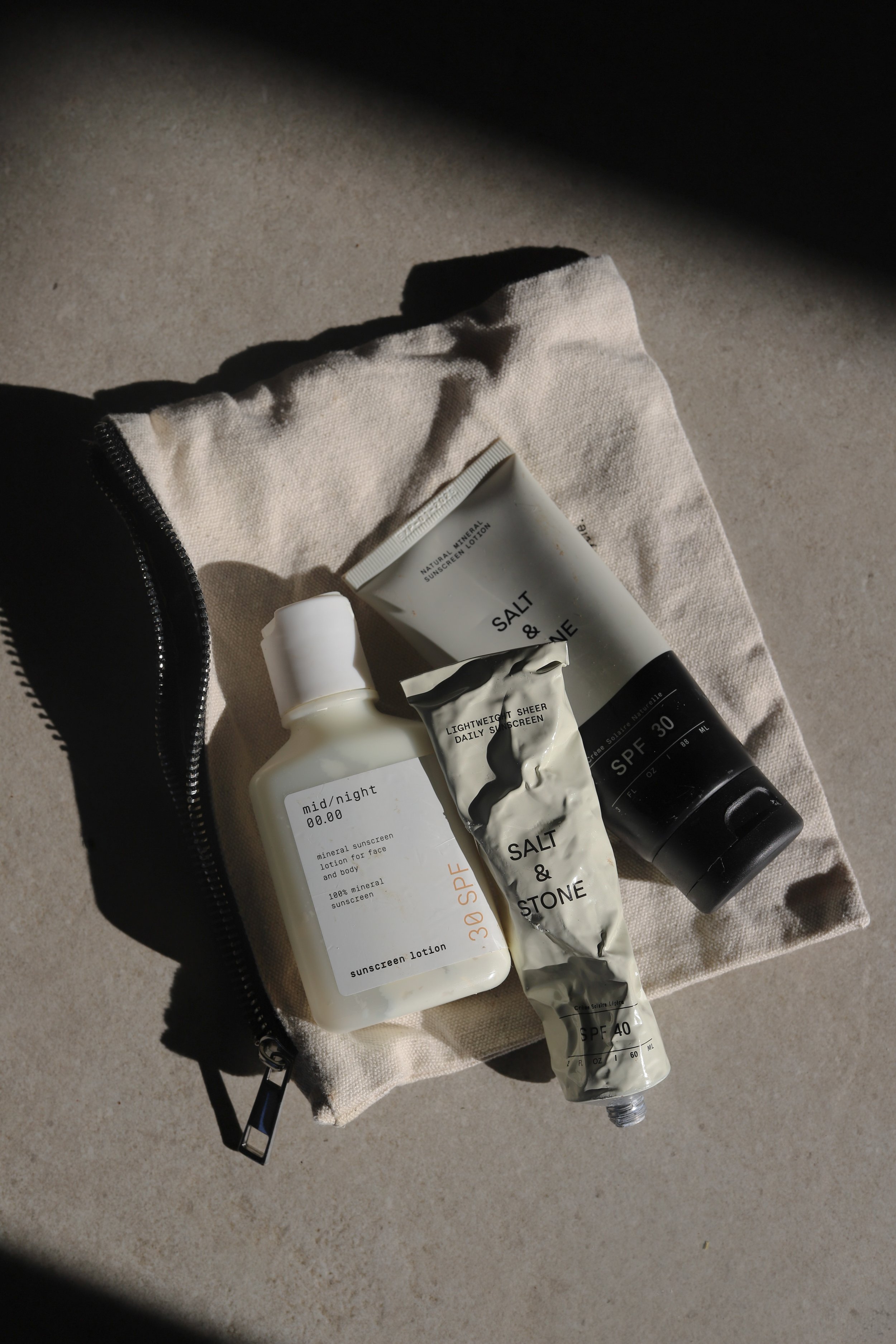
Start with a few trusted brands and patch-test on your inner arm for 24 hours to ensure the product is suitable for your skin. (*The brands we like include Salt & Stone and Mid/Night 00:00.)
Apply with Care:
Use about one teaspoon for your face and a shot-glass amount for your body. Reapply every two hours, or sooner if you’re swimming or sweating.
A Supportive Sun-Protection Routine
Pair mineral sunscreen with simple nutritional and lifestyle habits for overall skin support.
• Wear light protective clothing, a hat, and sunglasses during peak sun hours (10 a.m.- 4 p.m.).
• Support your skin from within with an “internal sunscreen” - Nutritional Therapy approach: eat colourful, antioxidant-rich foods such as berries, leafy greens, tomatoes, and peppers for carotenoids, polyphenols, and vitamin C. Include wild salmon, sardines, anchovies, nuts & seeds for omega-3 fatty acids and vitamin E, which may help reduce inflammation and support skin health.
• Stay well-hydrated (filtered water + electrolytes). Good hydration supports skin health, while low hydration may make the skin more sensitive to heat and sun exposure.
• Get safe sun exposure for vitamin D about 10 -15 minutes of midday sun on your arms or legs a few times a week then apply protection as needed.
Ref.
doi: 10.1289/ehp.116-a160b
doi: 10.1016/j.toxrep.2017.05.006
doi: 10.1007/s40572-025-00492-9
doi: 10.1590/abd1806-4841.20175697
doi: 10.3389/fimmu.2020.623052
doi: 10.5826/dpc.1101a132
DOI: 10.1111/phpp.12214
https://doi.org/10.1016/j.canep.2023.102379
doi: 10.1111/jocd.14033